


-
News
- admin
- 23 Nov 2025

Bali, Indonesia – The Coral Triangle Initiative on Coral Reefs, Fisheries, and Food Security (CTI-CFF) convened a two-day partnership gathering that included an International Seminar on SDG 14: Life Below Water, held back-to-back with the CTI-CFF University Partnership Forum and a Focus Group Discussion (FGD) on the Lesser Sunda Seascape (LSS) Science Hub.
The event, held in Bali on October 20–21, was attended by approximately 75 participants, including students, researchers, policy-makers, practitioners, government representatives, NGOs, and community leaders from across Southeast Asia and the Pacific to establish and strengthen regional efforts on marine sustainability under Sustainable Development Goal 14 and CTI-CFF’s Regional Plan of Action 2.0 (RPOA 2.0).
With the theme “Implementation of SDG 14: Life Below Water in CTI-CFF Countries”, the seminar offered a platform for participants to provide updates on efforts in progressing the implementation of SDG 14, and to exchange knowledge on sustainable ocean governance, marine biodiversity research, and climate-resilient coastal communities.
Dr. Frank Keith Griffin, Executive Director, CTI-CFF Regional Secretariat said, “This event represents a pivotal step forward for the Coral Triangle region. By bringing together diverse experts and formalising university partnerships through the Lesser Sunda Seascape Science Hub, we are bridging science, policy, and community action to accelerate the achievement of SDG 14. This collaboration underpins our Regional Plan of Action 2.0 and strengthens the collective capacity to protect and sustain life below water for the benefit of current and future generations.”
- Featured speakers included:
- Dr. HandokoAdi Susanto, Senior Research Fellow, PKSPL, IPB University/ ATSEA Executive Director (interim).
- Prof. Simon Saulei, University of Papua New Guinea
- Dr. Walter Oliveira Soares, Universidade Nacional Timor Lorosa’e
- Michael P.Atrigenio, PhD, Marine Science Institute, Universityof Philippines
- Mr. Iqbal Herwata, Konservasi Indonesia
A key outcome of the event was the signing of a Memorandum of Agreement (MoA) between the CTI-CFF Regional Secretariat and 11 universities—9 from Indonesia and 2 from Timor-Leste—formalising collaboration on the Lesser Sunda Seascape (LSS) Science Hub.

The participating universities are:
- Indonesia:
1. Universitas Nusa Cendana
2. Universitas Kristen Artha Wacana
3. Universitas Muhammadiyah Kupang
4. Universitas Pattimura
5. Universitas Tribuana Kalabahi
6. Politeknik Pertanian Negeri Kupang
7. Universitas Udayana
8. Universitas Mataram
9. Universitas Pertahanan
- Timor-Leste:
10. Universidade Nacional Timor Lorosa’e (UNTL)
11. Universidade Oriental Timor-Lorosa’e (UNITAL)
The MoA provides a framework for multi-institutional and multi-disciplinary collaboration on research, Student Exchange, technical expert exchange, capacity building, field training, data sharing (including with the Coral Triangle Atlas), and science-to-policy engagement within the LSS—a priority seascape under the CTI-CFF framework.
“This agreement opens the door for our university to collaborate more deeply with peers across the region on shared ocean challenges. It strengthens our capacity for research, innovation, and coastal stewardship,” said Dr. Ir. Arnol Elyazar Manu, MP, IPU, Dean of the Faculty of Animal Husbandry, Marine Science, and Fisheries, Nusa Cendana University, Kupang, NTT.
On October 21, a Focus Group Discussion (FGD) was held to outline and discuss the implementation of the LSS Science Hub Program, including its governance structure, priority research themes, and first-year workplan. These discussions built on the earlier discussions that were held in Dili, Timor Leste in May 2025 and in Kupang, Indonesia in June 2025. The same day also featured coordination meetings between the CTI-CFF University Partnership and Konservasi Indonesia, further enhancing the alignment of academic and conservation efforts across the region.
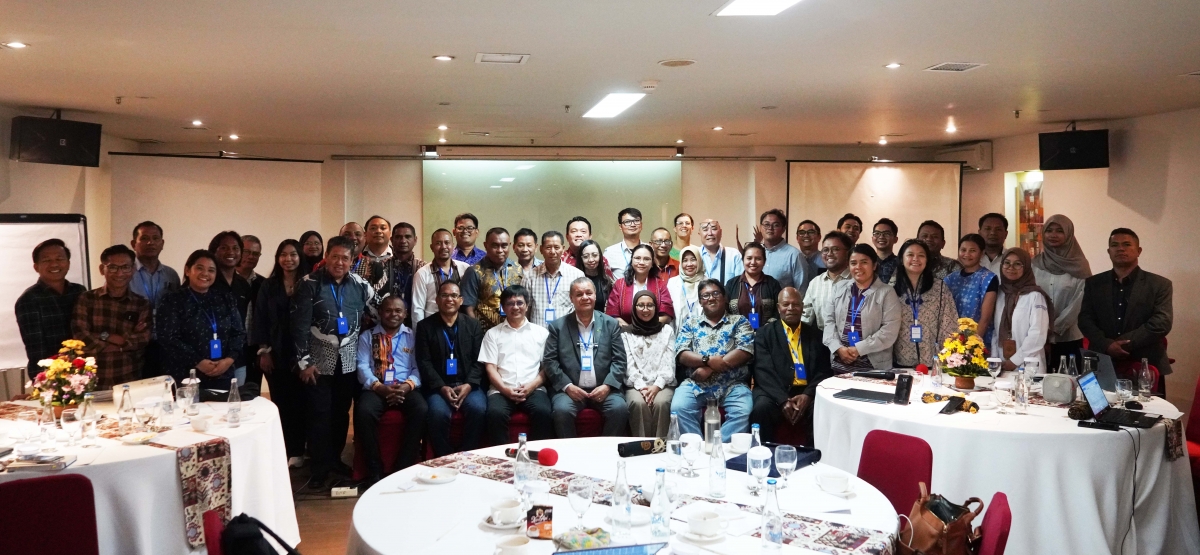
Following the FGD, participating universities and CTI-CFF will move forward with:
- A coordinated research calendar and joint fieldwork in LSS priority sites;
- Development of the LSS Science Hub Plan Action 2025 -2030;
- Finalisation of the LSS Science Hub Governance and Structure;
- Research Planning, Implementation, Monitoring and Evaluation mechanism;
- Resources mobilisation;
- UP Journal; and
- Data sharing mechanism.
A full seminar and FGD report summarising discussions, recommendations, and planned actions will be distributed to all stakeholders.
Looking ahead, the CTI-CFF Regional Secretariat aims to replicate this approach of collaboration in the Sulu-Sulawesi Seascape and the Bismark-Solomon Sea Ecoregion areas and expresses strong optimism that this will yield impactful research, innovative solutions, and strengthened policies to safeguard the Coral Triangle’s invaluable marine ecosystems. Through sustained partnership with universities and communities, CTI-CFF is committed to building a resilient future—ensuring healthy oceans and sustainable livelihoods for generations to come.
###
Note to media: Quotes included in this release are attributable to the individuals named and should not be attributed to the media contact listed below. For interview requests or further comment, please coordinate with the CTI-CFF Regional Secretariat.
About the Coral Triangle Initiative on Coral Reefs, Fisheries and Food Security (CTI- CFF)
The Coral Triangle Initiative on Coral Reefs, Fisheries and Food Security (CTI-CFF) is a multilateral partnership of six countries—Indonesia, Malaysia, Papua New Guinea, the Philippines, Solomon Islands, and Timor-Leste—working together to protect the Coral Triangle, the global epicenter of marine biodiversity. Often called the “Amazon of the Seas,” the Coral Triangle is home to 76% of the world’s known coral species (over 600 species of reef-building corals) and 37% of the world’s reef fish species, supporting the livelihoods and food security of more than 130 million people.
Through its Regional Plan of Action (RPOA 2.0), CTI-CFF drives regional collaboration to conserve coral reefs, expand marine protected areas, ensure sustainable fisheries, and build resilience to climate change. The CTI-CFF Regional Secretariat, based in Manado, Indonesia, coordinates this collective effort—bringing together governments, partners, and communities to advance a healthy, resilient, and inclusive blue economy across the Coral Triangle.
For more inquiries & information, contact:
Fritzgerald Wenur, Marketing & Information Officer, CTI-CFF Regional Secretariat
E: fritzgerald.wenur@cticff.org // www.coraltriangleinitiative.org
Kimberly Christine Chung, Communication & Information Manager, CTI-CFF Regional Secretariat
E: kimberly.chung@cticff.org // www.coraltriangleinitiative.org