


Canada Launches Women’s Empowerment Program to Protect the World’s Coral Triangle
Press release
Download : TNC Coral Triangle Resilience Project Launch
For Immediate release
Canada Launches Women’s Empowerment Program
to Protect the World’s Coral Triangle
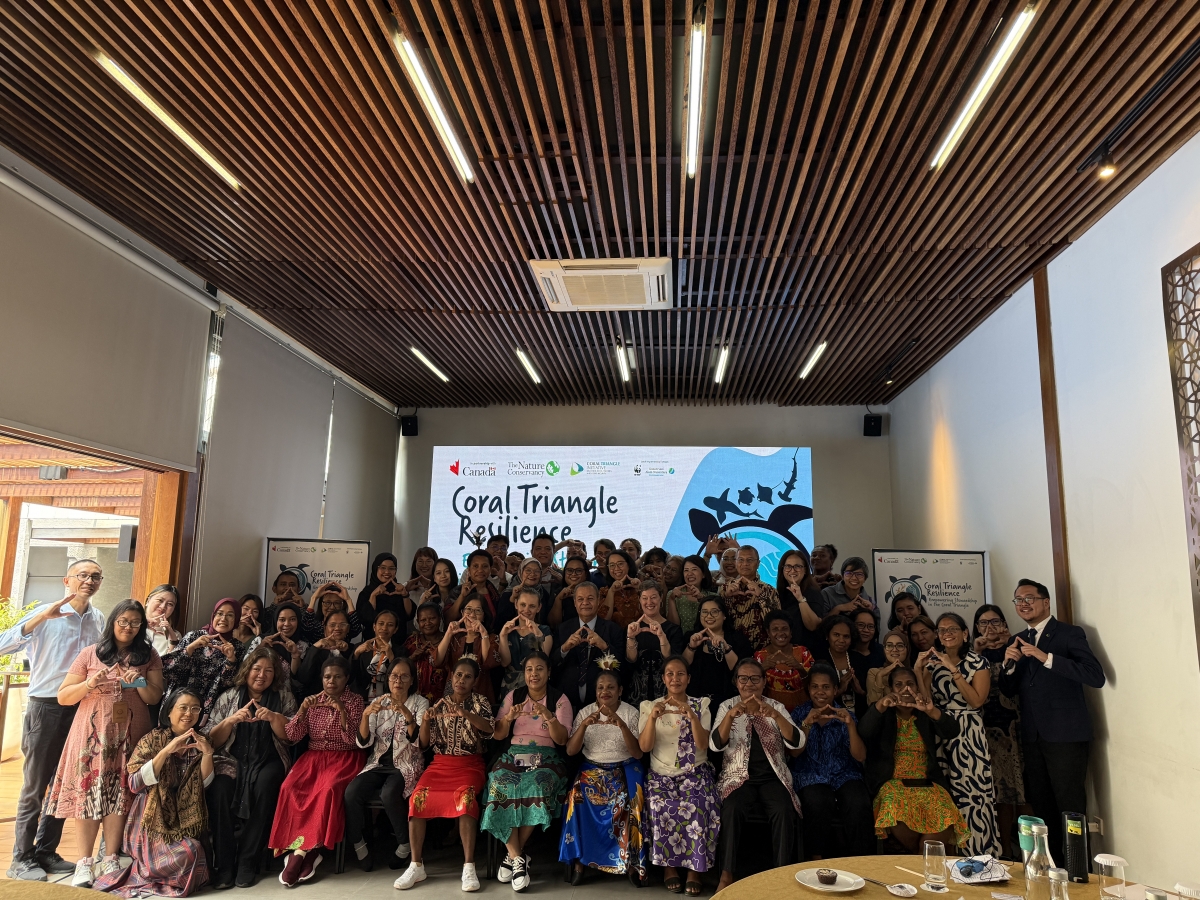
Jakarta, 14 April 2026 — Supported by the Government of Canada, through Global Affairs Canada, a coastal women’s empowerment program has been launched to strengthen women’s role in protecting the Coral Triangle, one of the most important marine regions in the world. Initiated by The Nature Conservancy (TNC), the program was officially launched in Jakarta on Tuesday (14/4), in collaboration with the Coral Triangle Initiative on Coral Reefs, Fisheries, and Food Security (CTI-CFF).
The program will be implemented in four countries—Indonesia, the Philippines, Papua New Guinea, and the Solomon Islands—with the support of various local partners, including Yayasan Konservasi Alam Nusantara (YKAN) in Indonesia and World Wide Fund for Nature (WWF) in Philippines. In Indonesia, activities will focus on two strategic areas within the global Coral Triangle: the Bird’s Head Seascape in Raja Ampat, Southwest Papua Province, and the islands of Teon, Nila, and Serua in Central Maluku Regency, Maluku Province. Both areas are recognized for their exceptional marine biodiversity but are increasingly threatened by climate change and mounting pressure on natural resources.
Head of the Planning Bureau and Acting Secretary General of the Ministry of Marine Affairs and Fisheries, and Focal Point of the Women Leaders’ Forum from Indonesia’s National Coordinating Committee of CTI-CFF, Andy Artha Donny Oktopura, expressed appreciation for the support of the Government of Canada and international and national partners. He noted that the program aligns with the Government of Indonesia’s commitment to strengthening sustainable and inclusive ocean management. “The involvement of women and coastal communities as key actors will enhance the effectiveness of conservation while also improving the social and economic resilience of local communities,” Andy said.
In his remarks, Canadian Ambassador to Indonesia Jess Dutton outlined three key pillars of the program. First, enhancing women’s knowledge, skills, and leadership so they can play an active role in natural resource management. Second, expanding access to financing mechanisms that enable women’s equal participation in natural resource management and climate solutions. Third, strengthening women’s involvement in governance and policy engagement.
Through this approach, women are expected to assume leadership roles in safeguarding marine and coastal ecosystems while strengthening the resilience of their communities. “Canada believes that women play a critical role in environmental protection and natural resource management,” said Dutton.
Dr. Frank Keith Griffin, the CTI-CFF Regional Secretariat Executive Director explained: “This initiative reflects the shared commitment of CTI-CFF Member Countries and partners to advancing inclusive and community-driven marine conservation. Empowering women is not only a matter of equity, but a strategic approach to strengthening the resilience of coastal ecosystems and the communities that depend on them. Through this collaboration, we reaffirm the importance of local leadership, knowledge exchange, and regional cooperation in sustaining the Coral Triangle for future generations.”
Through its role as a regional coordination platform, CTI-CFF supports the implementation of this program by facilitating collaboration among Member Countries and partners, and by promoting gender-inclusive approaches in marine and coastal management. The program is closely linked to CTI-CFF’s Women Leaders’ Forum (WLF), which serves as a regional platform to strengthen women’s leadership and participation in conservation, ensuring that the program’s outcomes contribute to and benefit from ongoing regional efforts to empower women across the Coral Triangle.
Women’s Leadership for a Sustainable Ocean
The Coral Triangle is widely known as the global epicenter of marine biodiversity, harboring approximately 76 percent of the world’s coral species and 37 percent of all reef fish species. Coral reefs and coastal ecosystems in the region provide food, livelihoods, and cultural identity for millions of people. However, climate change, overexploitation, and unsustainable fishing practices continue to pose serious threats to their survival.
TNC Asia Pacific Program Director Kathryn Michie emphasized that women’s participation is essential in addressing these challenges. “Women play a vital role in natural resource management and are often among the most affected by climate change. Yet they are frequently excluded from decision‑making spaces. This program gives us an opportunity to support women in taking on greater leadership roles in conservation and climate adaptation,” she said.
Meanwhile, YKAN Executive Director Herlina Hartanto noted that YKAN, together with government and local communities, has been working in the Bird’s Head Seascape since 2002. One of the key approaches has been supporting traditional knowledge and local practices, such as sasi, in marine resource management. “In three villages in Raja Ampat, we support women’s groups in leading sasi practices. We will also provide assistance to women’s groups in the Teon, Nila, and Serua Islands. Support from the Government of Canada enables us to further strengthen women’s active role in leading more equitable and sustainable marine protection and management efforts,” Herlina explained.
Silpa Botot, a woman from Aduwei Village, North Misool District, Raja Ampat, Southwest Papua, who attended the event in Jakarta, shared her hopes regarding the support from the Government of Canada. According to her, the support is crucial for preserving nature as the ancestral heritage of their community. “Thank you for supporting women in Misool. We hope that going forward our efforts can be better and more advanced, and that they will not stop here. We still want to keep learning so that nature remains protected for our children and grandchildren,” said Silpa Botot, who is also a member of the Joom Jak Sasi women’s group. Since 2022, the group has been entrusted with managing natural resources in their area through the sasi system.
The program launch was attended by government representatives from the six Coral Triangle countries, program staff, implementing partners, and community‑based women leaders from Indonesia, the Philippines, Papua New Guinea, and the Solomon Islands. The initiative aims to reach approximately 11,000 people and contribute to the protection of around 65,000 hectares of critical ecosystems across the Coral Triangle region.
***
About YKAN
Yayasan Konservasi Alam Nusantara (YKAN) is a science-based non-profit organization that has been present in Indonesia since 2014. With a mission to protect land and waters as a life support system, we provide innovative solutions to realize harmony between nature and people through effective natural resource governance, prioritizing a non-confrontational approach, and building a network of partnerships with all stakeholders for a sustainable Indonesia. For more information visit www.YKAN.or.id.
Media Contacts
Meita Annissa
Public Communications Manager YKAN
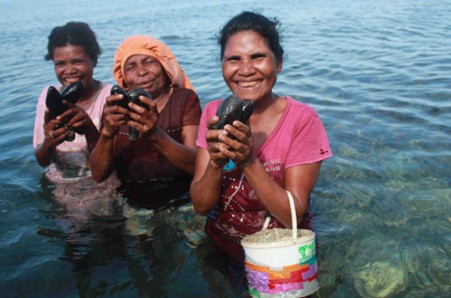
Local residents harvest sea cucumbers during the sasi opening in Misool (Photo: Nugroho Arif Wibowo/YKAN)
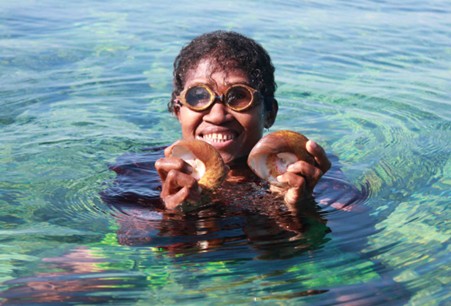
A women’s group member from Kapatcol, Raja Ampat, at the sasi opening (Pjoto: Nugroho Arif Prabowo/YKAN
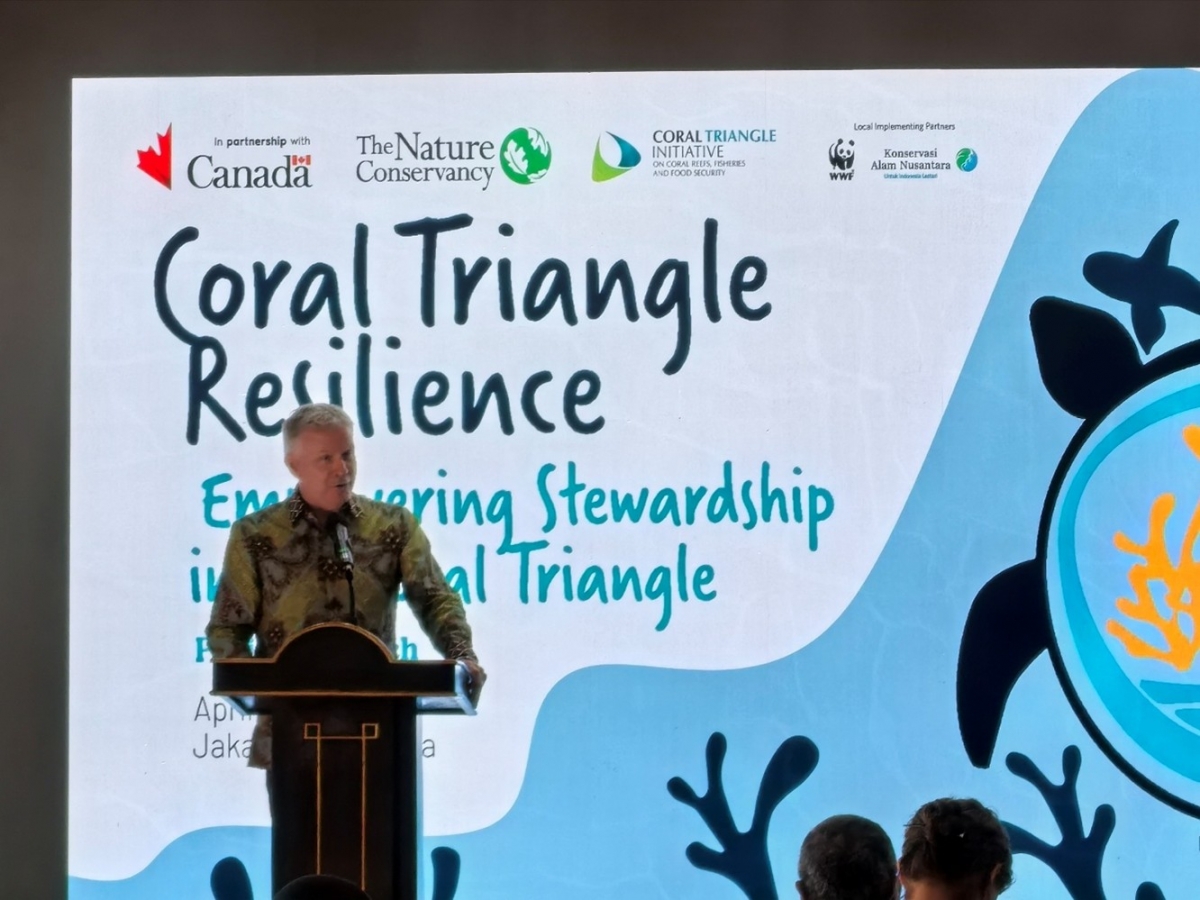
The Canadian Ambassador to Indonesia, Jess Dutton, delivers remarks at a program launch event (Photo: Meita Annissa/YKAN)

A women’s empowerment program funded by the Government of Canada, focused on Indonesia, the Philippines, the Solomon Islands, and Papua New Guinea. (Photo: Meita Annissa/YKAN)
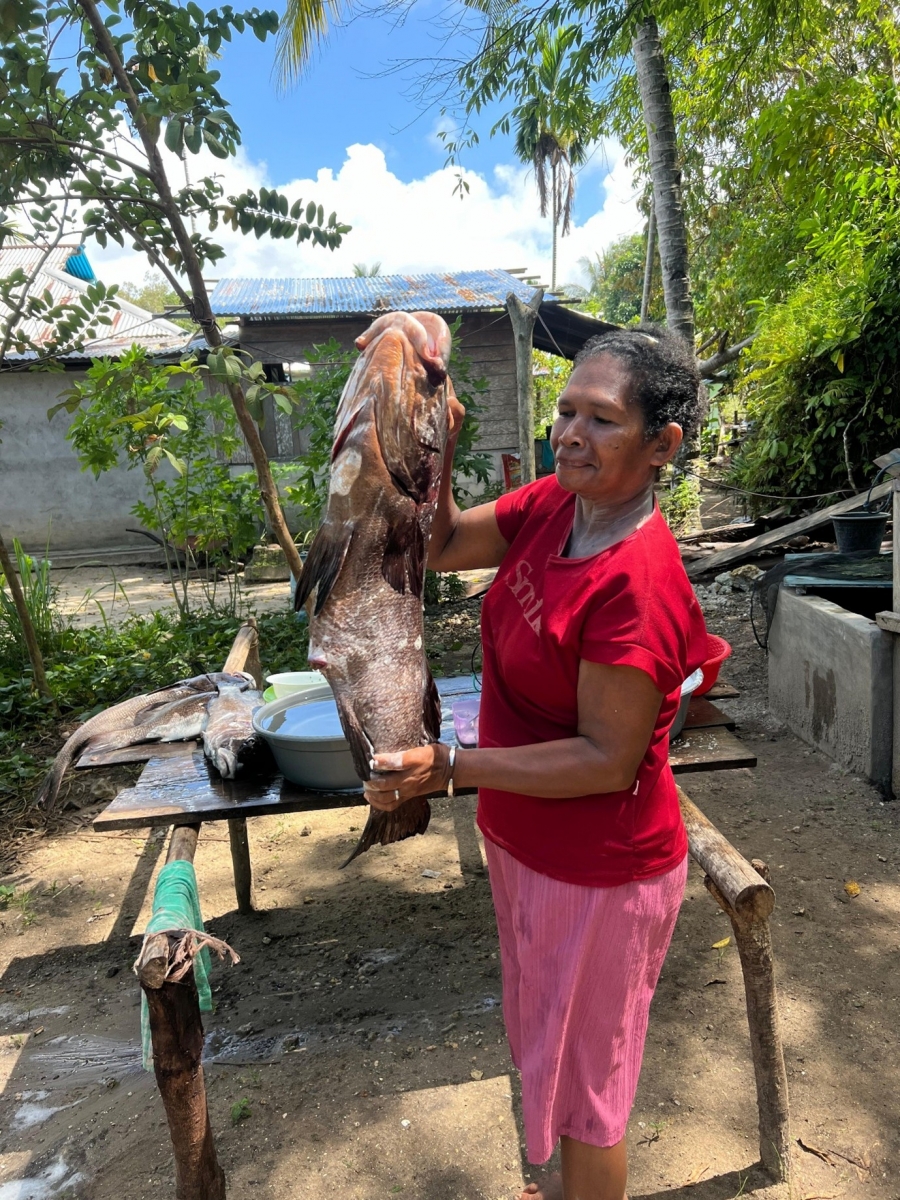
Women from Salafen Village in Raja Ampat showcase their catch (Photo: Yvonne/YKAN)